
Business English

You understand English well. Now itโ€™s time to speak with confidence.

Many professionals can read and write English. But speaking in meetings, presentations, and interviews is different. Pete helps you find your voice at work.

Who is this for?

Pete works with professionals from all fields. His students come from many different industries including software, sales, marketing, finance, healthcare, education, law, real estate and many more.

If you need to use English at work, now or in the future โ€” in emails, meetings, presentations or conversations with clients and colleagues โ€” Pete can help you speak with more confidence.

Software

Engineers & PMs

Sales

Account Executives & Leads

Marketing

Strategists & Directors

Finance

Analysts & Advisers

What will you learn?

Every lesson is built around the situations you actually face at work.

Pete teaching a Business English video call lesson with a group of professionals

Why Pete?

Pete does not use textbooks. He custom creates real situations from your work life. You will practice meetings, interviews, & conversations until they feel natural and easy. Every lesson is personal and practical.

Ready to speak with confidence at work?

Book a lesson with Pete on PREPLY.

FAQs

Frequently Asked Questions

Everything you need to know before booking your first lesson with Pete.

What level of English do I need?

Pete teaches A2 to C2 level students. Not sure of your level? Send Pete a message โ€” he can help you figure it out.

Most lessons are 50 minutes or 25 minutes.

Online. On Preply.

Yes! Every lesson is different for every student. You choose what you want to learn โ€” itโ€™s your lesson.

Click the Preply button above or below. You can see Peteโ€™s profile and book a trial lesson there. Or send Pete a direct message.

business-english-memento-media-2pPw5Glro5I-unsplash

Pete's bUSINESS ENGLISH cLASSROOM

โšพ THE L.A. DODGERS: TEACHING ENGLISH ONE INNING AT A TIME๐Ÿงข

Sometimes the best lesson plan isn’t a traditional lesson plan at all โ€” it’s baseball. โšพ

One of my students recently moved to Los Angeles from Japan, and like a lot of newcomers, he’s still finding his footing in a new city, a new culture, and a new language. But he found something that made the transition feel a little more like home: the Dodgers. ๐Ÿ’™๐Ÿค

With stars like Ohtani, Yamamoto, and Sasaki on the roster, watching the Dodgers isn’t just entertainment for him โ€” it’s a connection to Japan, right in the middle of his new American life. So we made it part of our classes. Every session, we split our time: half business English, half Dodgers talk. ๐Ÿ—ฃ๏ธ๐Ÿ“Š

And it works beautifully, because it’s not just fun โ€” it’s functional. My student regularly brings clients to Dodgers games as part of his job, and baseball chat is a big part of those business relationships. So we practice real dialogues: how to talk stats at a game, how to make small talk in the stands, how to discuss a player’s big night at work the next morning. ๐ŸŸ๏ธ๐Ÿ’ผ

It’s a perfect example of what good language learning should look like โ€” English that fits into someone’s actual life, not just a textbook. He gets to talk about something he loves, build real vocabulary he’ll use with real clients, and feel a little more connected to his new city, one game at a time. ๐ŸŒ†โšพ

Home run for language learning! ๐Ÿ†

โ›ชCHURCH SERVICES DURING CLASS???๐Ÿ™๐Ÿ‘ผ

For the first time ever, I did a bit of a church service in class the other day.

I have a student that moved to a new country and town for her job. She went to church and did not understand the English. So, I made a dialogue with AI and we actually read the service together.

She read the part of the priest. I read the part of the people, or congregation and we had a good time. ๐Ÿ‘ผ

Moments like this are why I love this job. It is always something new. But also, my student can now walk into church with more ability to follow along, instead of just standing there hoping to keep up. That’s the real goal of language learning. ๐Ÿ™โœจ Another brand new feather in my hat too I guess… ๐Ÿ˜€

๐Ÿ’ผTELL ME ABOUT YOURSELF: Still the king of interview questions๐Ÿคด

If I had to bet on one question showing up in a job interview, it would still be this one. “Tell me about yourself.” These are simple words, but they still trip up more candidates than almost anything else.  That includes plenty of native English speakers, not just ESL learners. Why is it a problem? Because the question feels open-ended, and open-ended questions make people panic.  They either ramble for five minutes, or even freeze completely.

Three of my students are practicing answering this question right now in classes. Here’s the good news they have discovered: this question does have a formula. Once you know the formula, it stops being scary. ย It becomes your favorite question in the whole interview โ€” because it’s the one moment where you control the story.ย  If you do it, right, you are on your way to getting a new job!

Why This Question Matters So Much

Interviewers ask this first for a reason. It’s not small talk. It’s your chance to set the framework for the entire interview.ย  You can help steer the conversation. You can help to decide what they focus on before they start picking things apart themselves. A strong answer builds confidence in the room immediately. A weak, rambling answer does the opposite. It makes the interviewer start the interview already a little worried.

The Classic Method: Past โ†’ Present โ†’ Future

The best-known structure โ€” and still the most reliable โ€” is essentially a two-minute spoken version of your resume, told as a story with direction. It has three parts:

1. Past โ€” Where you started
A brief summary of your background: your education, your early career, the skills you built. Keep this short. This is context, not the main event.

2. Present โ€” Where you are now
What you’re currently doing, what you’re good at, and โ€” importantly โ€” a specific achievement or two that proves it. Numbers and results are gold here. “I managed a team of six” is good. “I managed a team of six and increased output by 20%” is much better.

3. Future โ€” Why you’re here, right now, in this interview
This is the part people forget, and it’s the most important part. Connect your past and present directly to this company and this role. Explain what drew you to them specifically, and โ€” this is key โ€” pivot toward what you can offer them, not just what you want from them.

The One Rule to Remember

This question is not really “tell me about yourself.” It’s really asking: “Convince me, quickly, that you’re worth the next 30 minutes of my time.” Practice the structure, keep it under two minutes, and always land on how you can help them โ€” not just what you want from them.

Good luck in your next job interview!

Tell me about yourself: Do it right!

๐Ÿ—ฃ๏ธ๐Ÿ’ฌ YOUR TEACHER DOESN’T NEED YOUR LANGUAGE โ€” THEY NEED SKILL! ๐ŸŽฏโœจ

It has always been a funny thing to me. Many students think their English teacher should also speak their native language. They say it’s just in case they need help understanding something. This makes sense โ€” but it’s actually a kind of trap. ๐Ÿชค

Here is the truth: when a student reaches A2 level or higher, sharing a language with the teacher can actually cause problems. Why? Because when translation is easy to get, students use it instead of trying to understand English in English. That difficult moment โ€” when you don’t understand right away โ€” is where real learning happens. ๐Ÿง ๐Ÿ’ช Remember: every minute you spend speaking your native language in class is a minute you are NOT practicing English! โณ๐Ÿšซ

A good ESL teacher doesn’t need to know your language. They need patience, clear explanations, hand gestures, examples, and the skill to make things simple. These skills work in every classroom, with every student, from every country. ๐ŸŒ๐Ÿ‘ฉโ€๐ŸซSo next time you want to ask, “Do you speak my language?” โ€” ask yourself this instead: “Am I ready to stop depending on it?” If your level is already A2 or higher, the answer is almost always yes! โœ…๐Ÿš€

๐Ÿ’ผSTUDENT WORKING UNDER AN O-1 VISA๐Ÿ†

I am proud to say that I have a student working under an O-1 Visa! She started a company here in the USA and she is writing a book about it! (I am now supporting her English fluency journey.๐Ÿ‘๐Ÿผ)

What is an ‘O-1’ VISA?:

The O-1 visa is a nonimmigrant work visa for individuals with extraordinary abilities. It is specifically designed for foreign nationals who have demonstrated exceptional talent in fields such as science, arts, education, business, or athletics, or who have achieved notable recognition in the motion picture or television industry.

Key Features of the O-1 Visa:

  • Eligibility:ย Applicants must provide evidence of extraordinary ability, which can include awards, publications, or significant contributions to their field.
  • Job Offer Requirement:ย A job offer or recommendation from a U.S. employer is necessary to qualify.
  • Consultation Process:ย Before approval, applicants must obtain an advisory opinion from a relevant peer group or organization.
  • Duration and Extensions:ย The O-1 visa can be granted for the duration of the event, performance, or activity, with the possibility of unlimited extensions in one-year increments.

๐ŸFORD DEFEATS FERRARI IN THE AUGUST ESL CHALLENGE!๐ŸŽ๏ธ๐ŸŽ๏ธ๐Ÿ†

Team Ford defeated Team Ferrari in the August ESL Challenge 1185 to 1035! CONGRATULATIONS, TEAM FORD! (Just like the movie ๐Ÿ˜‰)

Students competed by answering questions on the following English tests.

๐ŸŒ IELTS โ€” International English Language Testing System, TOEFL โ€” Test of English as a Foreign Language ๐Ÿ’ผ TOEIC โ€” Test of English for International Communication, Cambridge English โ€” B2 First, C1 Advanced, C2 Proficiency ๐Ÿ’ป PTE Academic โ€” Pearson Test of English Academic

๐Ÿ†๐Ÿ’ช๐Ÿ NEXT ESL CHALLENGE STARTS ON SEPTEMBER 3rd!!

๐ŸŒ๐ŸŒŽEurope to USA: One Student’s Leap into 2028

Some stories I get to tell as a teacher fill me with pure pride, and this is one of them.

One of my students โ€” a woman with more than twenty years of hard-earned career experience behind her โ€” is packing up her whole life and family in Europe to start over in the United States in 2028. (Her son is also a student of mine ๐Ÿ™‚.) And when I say “start over,” I don’t mean drifting into the unknown. I mean walking in ready!

She’s spent months preparing. Earning certifications. Studying American business culture like it’s a subject she refuses to get anything less than an ‘A’ in. Her goal isn’t to stumble through her first year figuring things out โ€” it’s to walk into an American workplace on day one and already belong there. Honestly, watching that kind of discipline up close has been humbling. And she’s not doing it alone โ€” her husband and their two sons have been working just as hard, each getting ready in their own way for the leap ahead.

There’s a tender side to this move too. Her daughter is already out west building her career in the USA, and this relocation means closing the distance between them โ€” choosing family over the easy comfort of staying put. They already have people out there: friends who’ve hosted them, mentored them, shown them around on past visits. So this isn’t a family stepping into a void. It’s a family stepping toward people who already care about them.

Of course, the road ahead isn’t simple. Immigration paperwork, work authorization, house-hunting, culture shock โ€” all of it is still coming, for all of them. But she’s already networking, already reaching toward the small and medium-sized businesses where she wants to plant her next chapter.

To me, this isn’t just a relocation. It’s a woman betting on herself, on her family, and on a future they’ve all worked hard to earn together. I can’t wait to watch them get there!

๐ŸŽธ๐ŸŽถNEW GUITAR APP SUPPORTED BY Pete’s Lab

(MUSIC ENGLISH, BUSINESS ENGLISH (#2 STORY IN THE SERIES on PRACTICKAPP.COM)

Fabiano’s Guitar App Pracktick โ€” The Biggest and coolest Project in (Peteโ€™s Lab) Music English History

Pete’s student Fabiano โ€” a guitarist and developer from Brazil โ€” has built a real guitar practice app called Practick. And Pete has been supporting the English needs of the project.

What is Practick?

Practick is a guitar practice app designed for serious guitar players. It combines four essential tools in one place:

A tab player

A metronome

A session timer

Useful exercise library

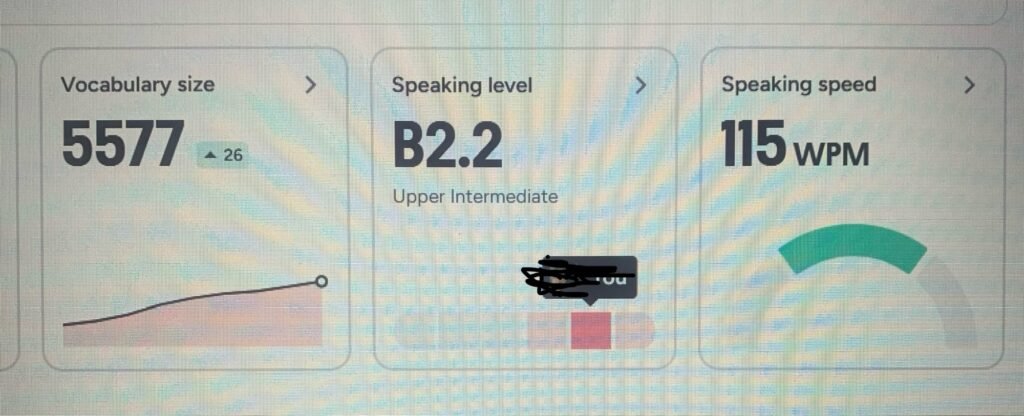
Reports to track your progress

AI-generated exercises (Coming soon!)

The idea behind Practick is simple but powerful. Most guitar players spend hours practicing without seeing real improvement. Practick turns those hours into structured, measurable progress. Every session. Every day.

Practick is available free on practickapp.com.  Coming soon to IOS and Android!

The English connection:

Fabiano has been studying Business English with Pete. As his app grew from an idea into a real product used by guitarists and teachers, the need for clear, professional English became critical.

Website copy. App descriptions. Documentation. Instructions. User communications. All of it needed to sound natural, professional and confident in English.

That’s where Pete comes in.

Why this matters for Music English

Music and English have always gone hand in hand at Pete’s Lab. But Fabiano’s project takes it further โ€” showing how English is not just about conversation. It’s a professional tool that opens doors in the global marketplace.

Fabiano’s story is proof of that.

Try Practick.com for guitar players and guitar teachers:

www.practickapp.com

โ€” coming soon:  free on iOS and Android. ๐Ÿ˜Š

PRACTICK: https://www.practickapp.com